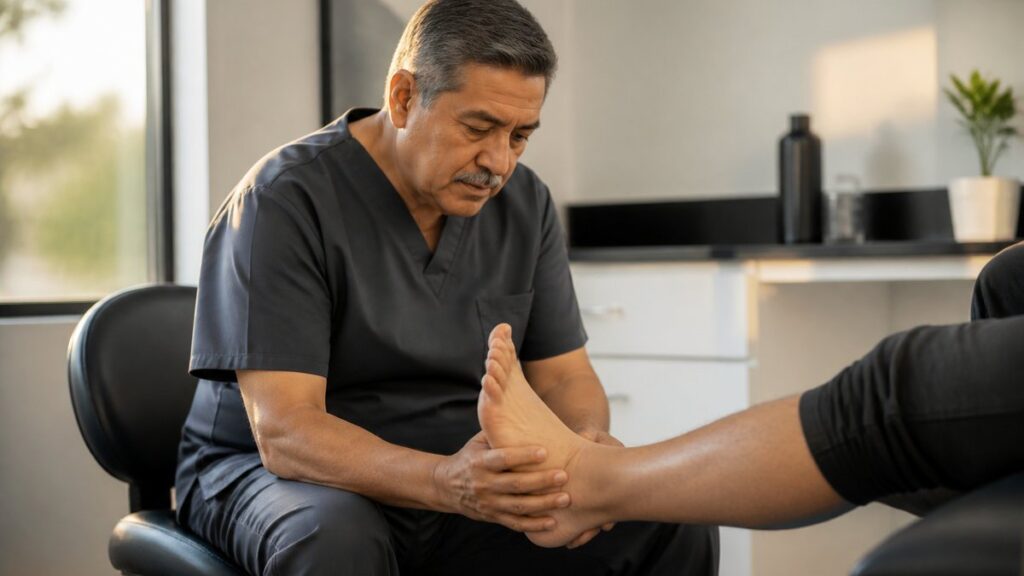
People rely on steady feet and stable ankles for training, games, and everyday movement. When a sprain, fracture, or tendon injury interrupts that routine, foot and ankle specialists guide recovery from the first exam through the return to sport. These physicians focus on the bones, ligaments, and soft tissues that support each step, so they understand how different sports stress the lower leg and foot. Here is more information on their role:
Diagnosing Sports Injuries
Accurate diagnosis starts with a detailed conversation about how the injury happened, and this includes questions about training volume or recent changes in footwear. Foot and ankle specialists evaluate alignment, check for swelling and bruising, and test ankle and midfoot stability. Imaging such as X-rays or advanced scans helps distinguish a simple sprain from a fracture. When the diagnosis is specific, treatment plans match the demands of the sport.
Stabilizing the Ankle
Once the injury is identified, the next step is protecting the joint so damaged tissues stay supported while they heal. Ankle stabilization limits unwanted motion, and it often reduces pain during early walking. The specialist selects braces, boots, or taping methods that match the level of instability, and they adjust support as the athlete progresses.
- Removable walking boots that restrict motion while allowing limited weight bearing
- Functional ankle braces that support side-to-side movement during later rehab stages
- Athletic taping techniques for practices and games once healing has advanced
- Short-term use of crutches when weight on the injured leg needs to be reduced
Providing Physical Therapy and Injections
Rehabilitation restores motion and strength after the initial phase of rest, and it also addresses balance and coordination. Specialists design or review therapy plans so exercises progress at a safe pace. When therapy follows a structured plan, athletes usually regain confidence in the injured limb more quickly.
Some injuries respond to targeted injections, and these treatments support the broader rehab strategy. Medication placed near irritated tissues helps control inflammation. It sometimes allows athletes to participate more fully in therapy. When injections are used thoughtfully, they complement strengthening work instead of replacing it.
Sports like basketball, soccer, and running place repeated stress on the same structures, and this repetition shapes therapy choices. To reflect cutting, jumping, or distance running patterns, specialists adjust exercises. They also address habits that contributed to the injury and provide guidance on warm-up routines.
Monitoring Healing
Follow-up visits track how bones, ligaments, and tendons respond to treatment, and they guide changes in activity level. The specialist compares strength and range of motion on both sides. They check whether swelling or pain lingers after practice sessions. When healing markers move in the right direction, training loads increase in a stepwise pattern.
Foot and ankle specialists often use functional tests such as single-leg hops, balance drills, and sport-specific movements to judge readiness for competition. If these tests reveal gaps, the rehab plan shifts back toward targeted strengthening or stability work. This measured approach supports both short-term recovery and long-term joint durability.
Find Foot and Ankle Specialists
Athletes who want focused care for sports injuries can look for providers who work with foot and ankle problems. A medical team can treat a wide range of foot and ankle conditions, and that scope suits active patients who face recurring sprains, tendon issues, or stress injuries. When a sprain, fracture, or overuse problem interrupts training, scheduling an evaluation with a local specialist helps align a coordinated plan.