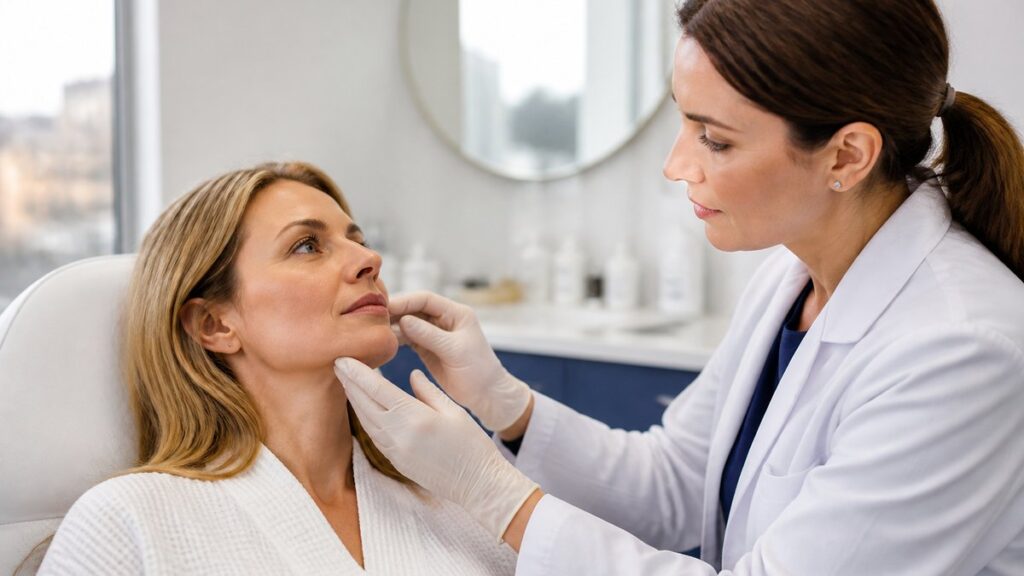
A chemical peel is a skin treatment in which a trained provider applies an acidic solution to the face, neck, or hands. The solution loosens the bonds between dead cells on the outer layer of skin, and those cells shed over the following days. Peel types vary by skin type and the concern you want to address. Here are some ways chemical peels address common skin concerns:
Clears Pores
When dead skin cells mix with oil, they form plugs inside pores. These plugs may lead to blackheads, whiteheads, and a rough surface. Salicylic acid is a common ingredient in peels aimed at pores. It is oil-soluble, so it moves through sebum and works inside the pore lining rather than only on the surface. Glycolic acid works on the surface, loosening dead cells that sit at the opening of each pore.
Many providers recommend a series of superficial peels spaced a few weeks apart for pore concerns. Peels also do not shrink pores permanently, since pore size is largely set by genetics. Between appointments, use a gentle cleanser and a non-comedogenic moisturizer, and avoid harsh products that may irritate the skin.
Fades Discoloration
Discoloration happens when melanin, the pigment that gives skin its color, collects in certain areas. Common types include sunspots, melasma, and post-inflammatory hyperpigmentation, which are the flat brown or red marks that remain after acne heals. A chemical peel removes skin layers that hold excess pigment, and new cells replace them.
Superficial peels with glycolic, lactic, or mandelic acid target pigment near the surface. Medium-depth peels, which often use trichloroacetic acid (TCA), reach deeper layers and address more stubborn spots. Some providers add ingredients to slow pigment production, and these formulas help limit new discoloration.
Skin tone matters here. People with medium to deep skin tones have a higher risk of developing new dark spots after a strong peel, so providers often start with milder acids and lower strengths. Before treatment, tell your provider about any history of scarring or cold sores.
Smooths Skin
Skin texture changes over time. Fine lines, shallow acne scars, and rough patches affect how skin looks and feels. Because peels remove the outer layer of dead cells, the surface underneath often feels softer. Superficial peels mainly affect the epidermis, while medium peels reach the upper dermis below it. Medium and deep peels may also stimulate collagen, a protein that gives skin its structure. Expect some redness, flaking, or peeling for several days after treatment, depending on the depth. Leave flaking skin alone, because picking at it raises the risk of irritation and marks.
Get a Chemical Peel
A chemical peel is one option for addressing clogged pores, uneven tone, and rough texture. The right peel depends on your skin type and your goals, and different formulas offer varying levels of exfoliation. A consultation gives you time to ask questions and learn what a treatment plan involves, including the number of sessions and recovery time. Book a consultation with a cosmetic dermatologist today to discuss which peel fits your skin.
Find more plain-language health guides and free online calculators on Nemin.io.