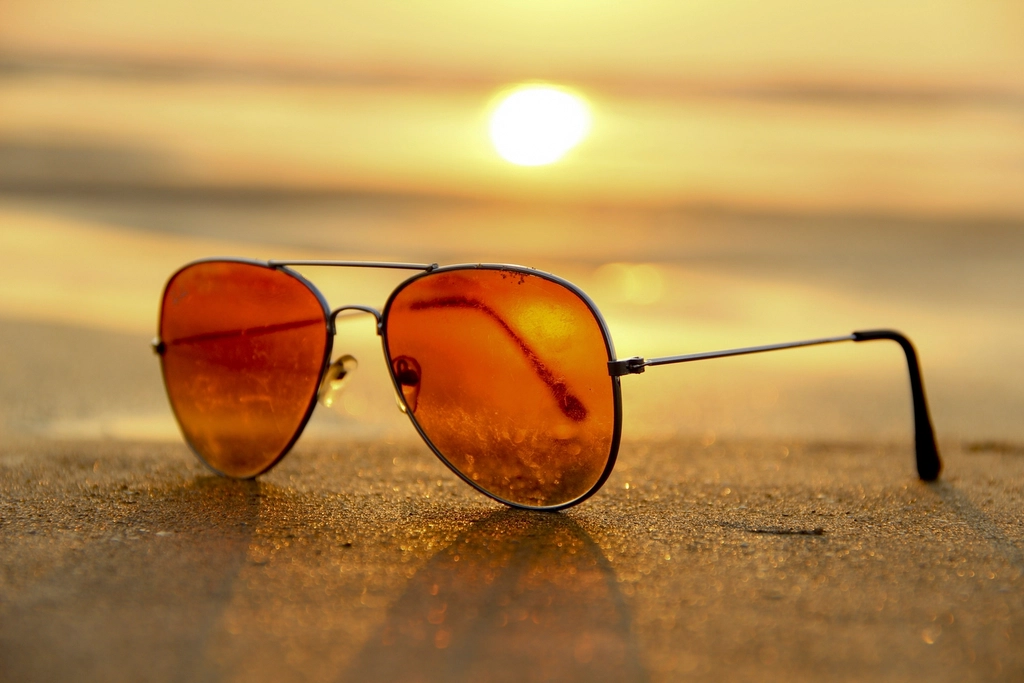
A good pair of sunglasses can make a sunny afternoon far more pleasant, but their real job goes beyond looking good. Bright sunlight contains ultraviolet light, which you cannot see or feel, and too much of it over time can be hard on the eyes and the delicate skin around them. Knowing what to look for helps you pick a pair that protects as well as it flatters.
Start With UV Protection
The single most important feature is the level of UV protection. Look for a label or tag that says the lenses block 100 percent of UVA and UVB rays, sometimes written as UV400. This matters more than price, brand or how dark the lenses look.
Dark tint alone does not mean strong protection. In fact, very dark lenses without UV filtering can make your pupils open wider, letting in more of the light you are trying to avoid. If a pair does not clearly state its UV rating, it is best to keep looking.
Pick the Right Lens Size and Shape
Larger lenses and wraparound styles cover more of the eye area and reduce the light that sneaks in from the sides. Oversized frames can be a practical choice for long days at the beach, on the water or in the snow, where sunlight reflects from many directions.
- Wraparound frames block more side glare during sports and outdoor work.
- Polarized lenses reduce glare from water, roads and snow, which many drivers find helpful.
- Gray or brown tints tend to keep colors looking natural.
- Impact resistant lenses are a smart pick for active hobbies.
Make Sure They Fit Comfortably
Sunglasses only help when you actually wear them, so comfort matters. The frames should sit evenly on your nose without pinching, and they should not slide down when you look at the ground. Your eyelashes should not brush the lenses when you blink.
If you wear prescription glasses, ask your optician about prescription sunglasses, clip-on lenses or lenses that darken outdoors. Each option has pros and cons, and a professional can help you find what suits your daily routine.
Wear Them More Often Than You Think
UV light is present even on cloudy days and in cooler months. It is a good idea to keep a pair in your bag or car so you are never caught without them. Children need eye protection too, so look for kid sized sunglasses with the same UV rating.
Choosing sunglasses is simple once you know the basics: full UV protection first, then good coverage, then a comfortable fit. Add a wide brimmed hat on very bright days, and your eyes will thank you for years of sunny outings to come.