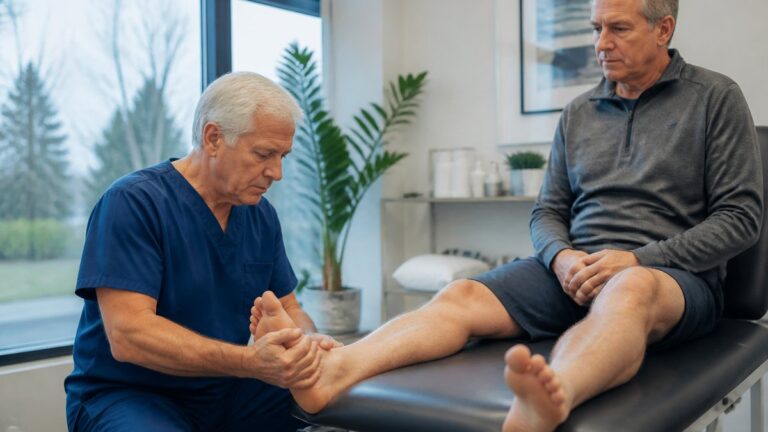
Acute and chronic knee pain can come from very different problems, but both kinds interfere with how you move. Acute pain follows a clear incident, such as a misstep, sudden twist, or direct blow to the joint. Chronic pain usually builds over time with repetitive stress or underlying joint disease. Paying attention to how the pain started, what makes it worse, and how long it lasts helps your doctor determine what kind of knee pain you have. Here’s more information on different types of knee pain and what they mean:
Sprains and Torn Ligaments
Sprains and torn ligaments often appear after a sudden pivot, landing, or collision, especially in sports or physically demanding jobs. To diagnose this kind of knee pain, orthopedic specialists use specific stress tests to see how the ligaments respond when the knee is gently moved and rotated. If the exam suggests a more serious tear, imaging, like X-rays for fractures and MRI scans to view soft tissues, may be used to confirm the injury’s extent.
Many ligament injuries are managed with conservative treatment and structured physical therapy first because many conditions heal without surgery. Rest, activity modification, ice, compression, and elevation are often recommended, along with bracing to support the joint while it recovers. Physical therapy focuses on reducing stiffness and restoring motion by strengthening the muscles that stabilize the knee, aiming to:
- Improve Function
- Lower the Risk of Re-injury
- Delay or Avoid Surgical Procedures
Even when surgery is needed, a strong, flexible knee going into the operation usually responds better during recovery, so physical therapy is often still used.
Rheumatoid Arthritis
Rheumatoid arthritis is an autoimmune condition that attacks the lining of the joints, causing inflammation, stiffness, and aching. When arthritis affects the knee joints, people often notice prolonged fatigue and swelling flares that interrupt daily tasks. Unchecked inflammation may damage cartilage, ligaments, and bone over time, which influences how the knee moves and bears weight. Many treatment plans include advanced joint injections to address symptoms and support function, such as:
- PRP Therapy: Platelet-rich plasma drawn from a person’s own blood and concentrated before being injected into the joint.
- Hyaluronic Acid Injections: Hyaluronic acid products placed into the knee to supplement the joint’s natural lubricating fluid.
- Corticosteroid Injections: Anti-inflammatory medication delivered directly into the joint space to address swelling and discomfort.
Cartilage Damage
Cartilage damage ranges from small, focal defects to widespread thinning that affects much of the knee joint’s surface, causing different pain sensations depending on size and depth. When symptoms stay focused in one area and the surrounding bone and alignment are relatively healthy, cartilage restoration procedures or other joint-preserving techniques may be recommended. These options are usually discussed after a period of nonoperative care, including activity changes, weight management, bracing, and physical therapy. The goal is to protect remaining cartilage and support more comfortable movement during daily activities and exercises.
Effectively Manage Your Knee Pain
Living with ongoing knee pain can lead people to limit activity, avoid exercise, and change how they walk, placing new stress on other joints. A specialist evaluates your overall health by examining your knee and ordering screening tests when needed. From there, you receive a plan that may blend home care strategies, medications, physical therapy, bracing, or injections. To learn more about your pain management options, contact an orthopedic sports medicine specialist today.