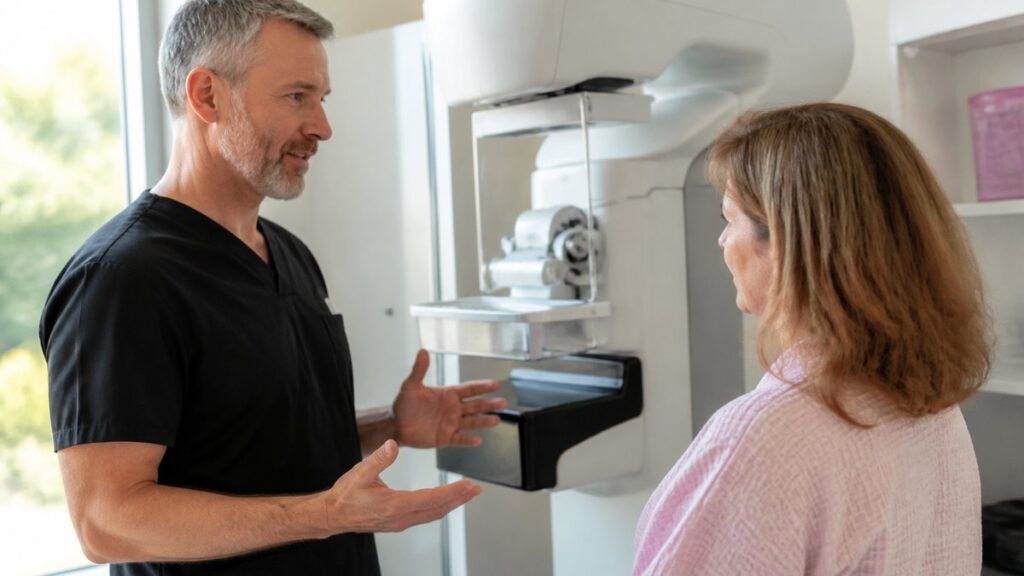
Clear communication supports each stage of breast screening, from reviewing medical history to discussing mammogram results. During appointments, providers explain procedures, address patient concerns, and answer questions about breast health. Because screening experiences vary, open communication helps patients understand the process and participate in decisions about their care. Here is more information about the role of communication during mammograms:
Reviewing Breast Health History
Breast screening appointments often begin with a review of personal and family medical history. Providers discuss previous mammograms, breast biopsies, surgeries, and any changes in breast health. Patients should also report new symptoms, including lumps, skin changes, or unusual discomfort. This information helps providers assess individual risk factors and determine whether additional imaging or evaluation is appropriate.
During the discussion, patients have opportunities to ask questions about screening recommendations and ongoing breast health monitoring. Providers explain how medical history and individual risk factors may influence mammogram frequency or additional testing. Open communication also helps patients recognize which breast changes should prompt further evaluation.
Providing Mammogram Recommendations
After reviewing medical history, providers discuss appropriate breast imaging options and recommended screening schedules. Factors such as age, previous imaging results, breast density, and individual risk levels help guide these recommendations. Providers also explain the purpose of routine screenings, follow-up imaging, and additional diagnostic tests when needed. This discussion helps patients understand their screening options, potential limitations, and next steps. Common topics discussed during these appointments include:
- Reviewing Screening Needs: Determining whether routine mammograms or follow-up imaging are appropriate based on previous results.
- Assessing Breast Density: Explaining how breast tissue density may influence imaging recommendations.
- Discussing Screening Frequency: Reviewing recommended mammogram schedules based on age, medical history, and individual risk factors.
- Exploring Additional Imaging: Explaining when breast ultrasounds or other diagnostic tests may be recommended.
- Preparing for Appointments: Answering questions about mammogram preparation, comfort, and follow-up procedures.
Discussing Breast Screening Results
Once mammogram results are available, providers explain the findings and discuss any changes compared with previous screenings. They review whether the images show areas requiring additional evaluation or continued monitoring. Clear explanations help patients understand medical terminology and recommended follow-up procedures.
Patients also have opportunities to ask questions about their results and future screening needs. Because some findings require additional imaging, providers explain why further testing may be recommended. These discussions help patients understand their options and participate in decisions about their breast health. Providers may also clarify when routine screenings should resume.
Receiving mammogram results sometimes causes uncertainty, particularly when additional testing is recommended. Providers address patient concerns while explaining the next steps and expected follow-up timeline. Written instructions and contact information also help patients prepare for future appointments.
Schedule Your Mammogram Today
Open communication during breast screenings helps patients understand procedures, imaging results, and recommended follow-up care. During appointments, providers review breast health concerns, explain screening recommendations, and answer questions about previous imaging. Because individual screening needs vary, these discussions help patients make informed decisions about their breast health. Schedule a breast screening appointment today to discuss your concerns and receive personalized guidance on mammogram recommendations.